For decades, culture and sensitivity (C&S) has been the cornerstone of microbiology in clinical practice. It is familiar, accessible, and historically reliable. However, as the medical landscape shifts toward precision medicine and rapid intervention, the inherent limitations of culture-based testing are becoming increasingly difficult to ignore.
For physicians and medical practice managers, the decision to modernize diagnostic protocols is no longer just about keeping up with technology—it is about clinical outcomes, patient safety, and operational efficiency. In this post, we explore why Polymerase Chain Reaction (PCR) is rapidly replacing traditional culture methods as the superior diagnostic tool.
1. The Speed Gap: Reducing Turnaround Time
The defining weakness of traditional C&S is time. Culturing requires the active growth of organisms, a process that can take 48 to 72 hours—or longer for slow-growing, fastidious, or anaerobic bacteria. In the management of acute infections, this “waiting period” often forces physicians to delay treatment or rely on broad-spectrum empirical antibiotics, which contributes to the global crisis of antimicrobial resistance (AMR).
PCR provides results in a fraction of the time, often within hours. As noted in clinical studies evaluating molecular diagnostics, rapid identification allows for targeted, narrow-spectrum therapy much earlier in the infection cycle. This not only improves patient recovery rates but also reduces the length of hospital stays and associated costs (CDC, 2021).
2. Unmatched Sensitivity and Specificity
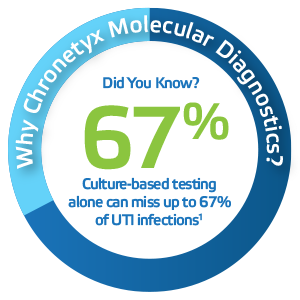
Traditional cultures suffer from a significant “dropout” rate. Many organisms, particularly those involved in polymicrobial infections or those requiring specific environmental conditions, fail to grow in laboratory settings.
PCR is inherently more sensitive. By targeting specific DNA/RNA sequences, molecular testing identifies pathogens whether they are alive, dead, or suppressed by prior antibiotic use. Research published in Microorganisms highlights that molecular diagnostics consistently detect a broader range of pathogens in complex samples compared to culture-based techniques (MDPI, 2025). This is critical in clinical scenarios like urinary tract infections (UTIs) or wound care, where culture-negative results often lead to misdiagnosis or unnecessary antibiotic stewardship failures.
3. Tackling Antimicrobial Resistance (AMR)
Perhaps the most persuasive argument for switching to PCR lies in its ability to detect resistance markers. Culture-based sensitivity tests are reactive—they tell you what the bacteria did in a dish after it grew. PCR is predictive; it identifies the genetic markers associated with resistance (such as mecA for MRSA or various beta-lactamase genes) almost immediately.
According to recent literature, early detection of resistance genes enables clinicians to de-escalate or escalate therapy with precision, preventing the “trial and error” approach that characterizes ineffective antibiotic prescribing (Journal of Infection, 2023).
4. The Challenges of Polymicrobial Infections
In chronic infections, such as diabetic foot ulcers or chronic sinusitis, the microbiome is often complex and polymicrobial. Culture methods frequently favor the growth of one dominant organism, masking the presence of others that may be contributing to the patient’s pathology. Molecular diagnostics, particularly targeted and syndromic PCR panels, have demonstrated an ability to map these complex microbial communities with high fidelity, providing a more comprehensive view of the infection (PMC, 2024).
5. Operational Advantages for Practice Managers
Moving away from traditional manual plating and incubation reduces the overhead associated with laboratory space, labor-intensive bench work, and the logistical burden of handling samples that may die in transport. PCR platforms, particularly those designed for high-throughput clinical settings, offer:
- Standardization: Reduced variability compared to manual technician-dependent interpretation.
- Workflow Optimization: Automated systems require less hands-on time, allowing staff to focus on patient care.
- Improved Patient Satisfaction: Faster results lead to quicker answers for the patient, reducing follow-up anxiety and the need for repeat visits.
The Verdict: Embracing the Future
While culture and sensitivity served medicine well in the 20th century, the 21st century demands higher resolution. The shift toward PCR is not merely a technological trend; it is a clinical necessity.
By adopting PCR-based diagnostics, medical practices can improve the accuracy of diagnosis, minimize the use of broad-spectrum antibiotics, and significantly shorten the time to effective treatment.